

It was a quiet Sunday morning when Aarav, a first-time father, sat on the floor watching his one-year-old daughter, Meher, stack colorful cups with serious concentration. Just a week ago, she had only been knocking them down—but today, she giggled as she managed to stack three before clapping for herself.
Aarav turned to his wife and asked, “Isn’t it amazing how fast she’s learning? I wonder how her little brain is figuring all this out so quickly.”
What Aarav didn’t know was that Meher’s brain was forming over a million new connections every second—connections that would shape her thinking, behavior, emotions, and relationships for the rest of her life.
The first five years aren’t just about learning to walk or talk. They are when a child’s brain is building its lifelong foundation.
What Makes the First 5 Years So Critical?
When your child is born, they arrive with 100 billion neurons—the building blocks of the brain. But what makes the brain powerful is the connection between these neurons, and that process begins immediately.
According to the Harvard Center on the Developing Child, over 1 million new neural connections are formed every second during the first few years of life. These connections are shaped by early experiences, including sight, sound, touch, nutrition, and emotional bonding. In short, your child’s environment, stimulation, and care in these years directly shape how their brain wires itself for learning, behavior, and relationships.
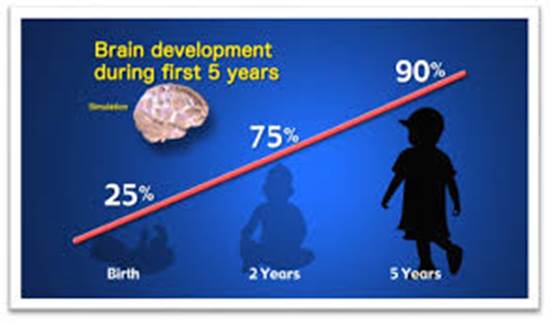
- Brain Development Peaks Early: By age 3, a child’s brain is already 80–85% of its adult volume. However, the speed at which the brain builds connections (synapses) is what sets this time apart.
- By age 2, the brain has double the number of synapses compared to an adult brain.
- These extra connections allow the child to absorb language, movement, emotion, and social cues rapidly.
But here’s the catch: unused connections begin to fade, a process called “pruning.” That’s why rich, positive experiences early on make all the difference.
- Language and Communication: The More They Hear, The More They Learn
Talking and reading to your baby may seem simple, but it’s powerful. The landmark Hart & Risley study (1995) found that children from language-rich homes heard 30 million more words by age 3 than those from less communicative environments.
These children:
- Had stronger vocabularies
- Developed better reading skills in school
- Scored higher on IQ tests later on
So even when your baby can’t talk back, talk to them often. Sing, read books, and describe the world around them. Their brain is listening—and growing.

3. Emotional Security Builds Mental Strength
The first 18 months lay the foundation for emotional regulation, attachment, and resilience.
- Studies show that children who experience responsive, loving caregiving develop stronger stress-management systems.
- In contrast, chronic stress in early years such as neglect, abuse, or unstable environments can lead to long-term issues with anxiety, aggression, and learning.
Simple acts like comforting your child when they cry, maintaining routines, and offering praise help them feel safe, which is essential for learning.

4. Physical and Motor Skills Evolve Rapidly
From rolling over to running, the first five years witness astonishing physical growth.
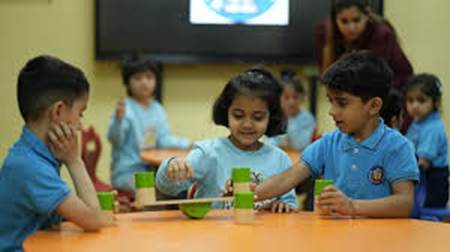
- Gross motor skills (like walking and climbing) and fine motor skills (like grasping or drawing) are built through play.
- Studies show that active play improves not just movement, but also attention span and cognitive ability.
That’s why free play, outdoor time, and hands-on activities are essential—not just entertainment.
Early Intervention Is Easier Than Catching Up Later
Pediatricians closely track your child’s growth and developmental milestones in the first five years. This is the best time to catch delays or signs of:
- Speech or motor delays
- Autism spectrum disorder (ASD)
- Hearing or vision concerns
- ADHD or learning issues
Research shows that early intervention services—when started before age 3—can dramatically improve outcomes, especially for children with neurodevelopmental concerns.
That’s why regular well-baby visits, screenings, and parent checklists are so important.
What You Can Do as a Parent
You don’t need expensive toys or fancy programs. The best investment is your time, attention, and care. Here’s what supports strong development:
Respond to emotions with warmth
Talk, read, and sing every day
Play with your child, indoors and outdoors
Stick to routines—they build security
Offer healthy food and regular sleep
Attend regular check-ups with your pediatrician